
Content
How can European projects work together to better protect and restore our seas? This was one of the key questions at the LIFE Platform Meeting: Marine Restoration in Europe — Best Practice and Innovation (subtitled “Meeting the Challenges of the Nature Restoration Regulation”), held from 9 to 11 June 2026 in Valencia, Spain. This major event, organized by the European Climate, Infrastructure and Environment Executive Agency (CINEA), brought together researchers, project coordinators, policymakers, and marine restoration practitioners from across Europe to exchange knowledge, share best practices, and strengthen collaboration in the face of the challenges posed by the new European Nature Restoration Regulation.
The event opened with a plenary session focused specifically on strategies to respond to these new regulatory milestones. Among the key moments of the session were institutional addresses from the Spanish Ministry and the European Commission, alongside project presentations from Horizon Europe BioAgora, LIFE-MAPPER, and LIFE-IP BIODIVERSEA, which outlined future methodological and governance tools for monitoring European habitats.
Although the various projects address seemingly distant challenges — ranging from the study of benthic and deep-sea habitats to the conservation of coastal seagrass meadows, marine spatial planning, and biodiversity management — all participants shared a remarkably strong common message: effective marine restoration depends on transnational cooperation, high-quality knowledge, and the ability to connect expertise across disciplinary and geographical boundaries.
Below are the contributions and profiles of the researchers and experts who spoke during the event:
Fernando Magdaleno
Working at the Spanish Ministry for the Ecological Transition and the Demographic Challenge, Fernando Magdaleno coordinates national ecological restoration planning and marine biodiversity policies, focusing on Spain's National Restoration Plan.
Watch the interviewHide the interview
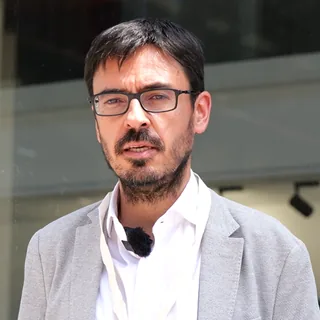
Working at the Spanish Ministry for the Ecological Transition and the Demographic Challenge, Fernando Magdaleno coordinates national ecological restoration planning and marine biodiversity policies, focusing on Spain's National Restoration Plan.
Watch the interviewHide the interview
Ute Jacob
Based at the Helmholtz Institute for Functional Marine Biodiversity (University of Oldenburg, Germany), Ute Jacob collaborates with Horizon Europe BioAgora, where she focuses on science-policy dialogue and the gap-mapping of Annex II marine habitats.
Watch the interviewHide the interview
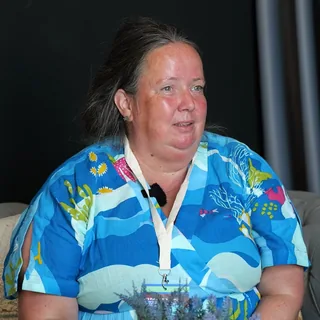
Based at the Helmholtz Institute for Functional Marine Biodiversity (University of Oldenburg, Germany), Ute Jacob collaborates with Horizon Europe BioAgora, where she focuses on science-policy dialogue and the gap-mapping of Annex II marine habitats.
Watch the interviewHide the interview
Jordi Grinyó
Working at the Institute of Marine Sciences (ICM-CSIC, Spain), Jordi Grinyó collaborates with the LIFE ECOREST project, focusing on scaling up deep-sea benthic restoration through participatory and multi-specific approaches.
Watch the interviewHide the interview
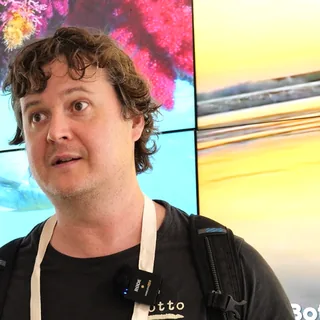
Working at the Institute of Marine Sciences (ICM-CSIC, Spain), Jordi Grinyó collaborates with the LIFE ECOREST project, focusing on scaling up deep-sea benthic restoration through participatory and multi-specific approaches.
Watch the interviewHide the interview
Simonetta Fraschetti
Based at the University of Naples Federico II in Italy, Simonetta Fraschetti works with LIFE-MAPPER and Horizon Europe CLIMAREST, specializing in coastal ecology, climate resilience, and spatial prioritization in ecological restoration.
Watch the interviewHide the interview
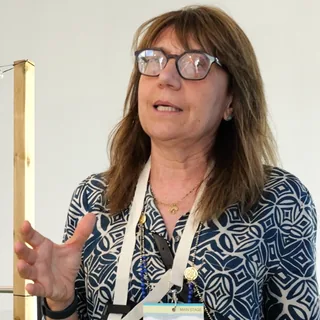
Based at the University of Naples Federico II in Italy, Simonetta Fraschetti works with LIFE-MAPPER and Horizon Europe CLIMAREST, specializing in coastal ecology, climate resilience, and spatial prioritization in ecological restoration.
Watch the interviewHide the interview
Stelios Katsanevakis
A professor at the University of the Aegean in Greece, Stelios Katsanevakis collaborates with LIFE MareNatura and Horizon Europe MarinePlan, focusing on systematic conservation planning and passive restoration for marine biodiversity.
Watch the interviewHide the interview
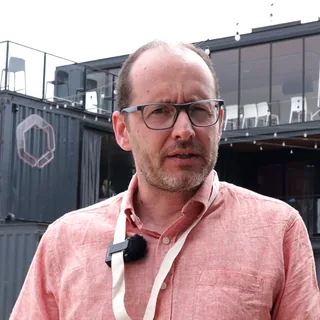
A professor at the University of the Aegean in Greece, Stelios Katsanevakis collaborates with LIFE MareNatura and Horizon Europe MarinePlan, focusing on systematic conservation planning and passive restoration for marine biodiversity.
Watch the interviewHide the interview
João Pedro Coelho
Based at the Centre for Marine and Environmental Sciences (CESAM) and the University of Aveiro in Portugal, João Pedro Coelho works on the LIFE SeaGrassRIAwild project, specializing in coastal habitat restoration and seagrass (Zostera marina) mariculture.
Watch the interviewHide the interview
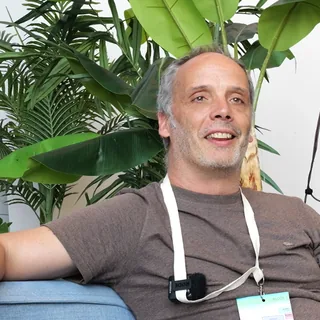
Based at the Centre for Marine and Environmental Sciences (CESAM) and the University of Aveiro in Portugal, João Pedro Coelho works on the LIFE SeaGrassRIAwild project, specializing in coastal habitat restoration and seagrass (Zostera marina) mariculture.
Watch the interviewHide the interview
Ric Sagarminaga van Buiten
Based at Alnitak in Spain, Ric Sagarminaga van Buiten works on the LIFE OASIS project, focusing on mitigating negative interactions between pelagic fisheries, marine litter, and protected marine species.
Watch the interviewHide the interview
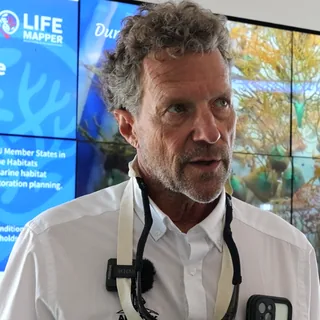
Based at Alnitak in Spain, Ric Sagarminaga van Buiten works on the LIFE OASIS project, focusing on mitigating negative interactions between pelagic fisheries, marine litter, and protected marine species.
Watch the interviewHide the interview
José Rafael García March
Working at IMEDMAR (Catholic University of Valencia, Spain), José Rafael García March collaborates on the LIFE PINNARCA and LIFE PINNACARE projects, specializing in the field monitoring and conservation of the critically endangered noble pen shell (Pinna nobilis).
Watch the interviewHide the interview
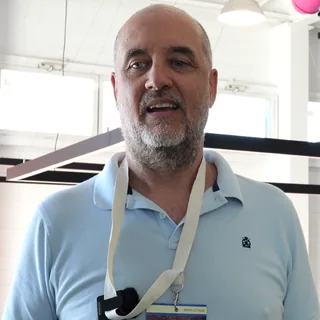
Working at IMEDMAR (Catholic University of Valencia, Spain), José Rafael García March collaborates on the LIFE PINNARCA and LIFE PINNACARE projects, specializing in the field monitoring and conservation of the critically endangered noble pen shell (Pinna nobilis).
Watch the interviewHide the interview
Sanni Turunen & Anu Riihimäki
Working with Metsähallitus Parks & Wildlife in Finland, Sanni Turunen and Anu Riihimäki collaborate on the LIFE-IP BIODIVERSEA project, focusing on marine data collection, regional governance models, and environmental planning tools.
Watch the interviewHide the interview
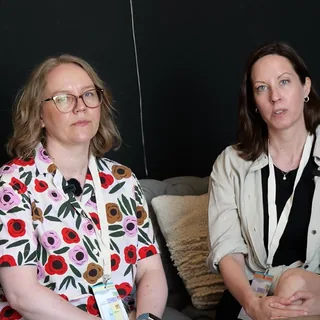
Working with Metsähallitus Parks & Wildlife in Finland, Sanni Turunen and Anu Riihimäki collaborate on the LIFE-IP BIODIVERSEA project, focusing on marine data collection, regional governance models, and environmental planning tools.
Watch the interviewHide the interview
Marina Parra Carreiro e Silva
Based at the University of the Azores (OKEANOS, Portugal), Marina Parra Carreiro e Silva works with Horizon Europe REDRESS, focusing on the active restoration of deep-sea cold-water coral gardens in partnership with local fishing communities.
Watch the interviewHide the interview
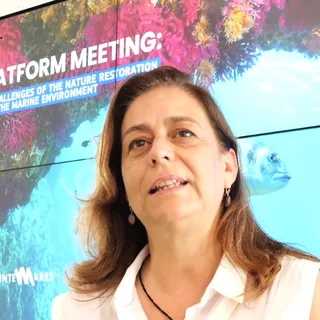
Based at the University of the Azores (OKEANOS, Portugal), Marina Parra Carreiro e Silva works with Horizon Europe REDRESS, focusing on the active restoration of deep-sea cold-water coral gardens in partnership with local fishing communities.
Watch the interviewHide the interview
Eleonora De Sabata
Working with MedSharks in Italy, Eleonora De Sabata collaborates with the LIFE EU SHARKS project, focusing on shark and ray conservation, stakeholder engagement, and marine citizen science.
Watch the interviewHide the interview
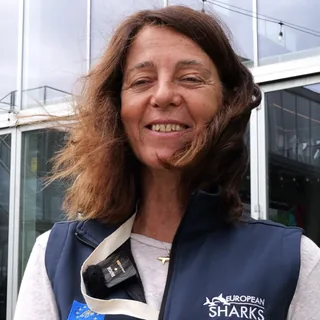
Working with MedSharks in Italy, Eleonora De Sabata collaborates with the LIFE EU SHARKS project, focusing on shark and ray conservation, stakeholder engagement, and marine citizen science.
Watch the interviewHide the interview
This wide array of expertise faithfully reflects the central message of the Platform Meeting: no single project can tackle the monumental challenges threatening Europe’s seas alone. Openly sharing data and experiences is the fundamental prerequisite for achieving the objectives of the EU Biodiversity Strategy and the Nature Restoration Law.


